
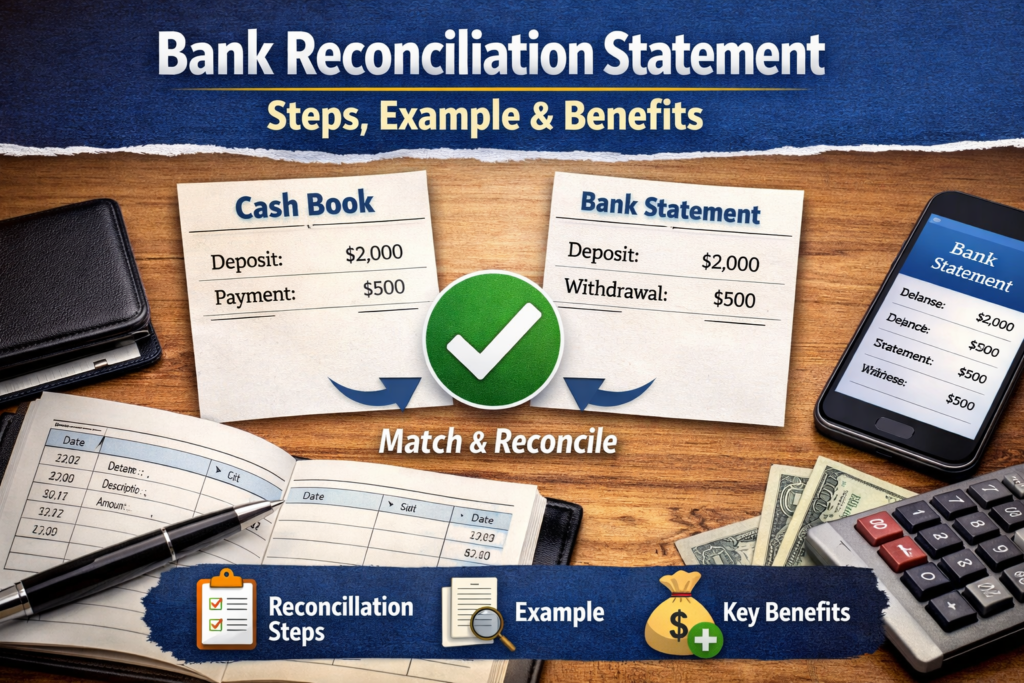
Friends often ask how to ensure their cash balances match. A bank reconciliation statement helps compare your books and bank statements easily. It solves errors, prevents fraud, and improves financial clarity immediately.
Using this guide, anyone can prepare it without stress or mistakes. Let’s dive into how to do it and why it matters.
What Is a Bank Reconciliation Statement?
A bank reconciliation statement is a report that matches the books accurately. It compares the company’s cash records with the bank statement balance.
It helps detect errors and timing differences before problems grow. Businesses and individuals use it to verify financial accuracy quickly.
Steps To Prepare a Bank Reconciliation Statement
Step 1: Gather Documents
Collect your cash book ledger and the relevant bank statement. Include all deposits, withdrawals, and internal accounting records carefully. This ensures nothing is missed when comparing records side by side.
Step 2: Compare Balances
Check if the opening cash book balance matches the bank statement balance. Identify differences caused by fees, deposits in transit, or withdrawals. Mark unmatched items clearly for later adjustments during the reconciliation process.
Step 3: Identify Outstanding Checks
List all outstanding checks not cleared by the bank yet. Ensure each check is verified in the books and banking records. Adjustments are made after confirming amounts and transaction dates carefully.
Step 4: Match Deposits In Transit
Check deposits in the cash book that are not credited in the bank. These deposits in transit explain temporary mismatches in accounts quickly. Include them in adjustments to reconcile the cash book accurately each time.
Step 5: Adjust For Bank Fees And Interest
Record any bank charges or interest missed in the books immediately. Adjust bank reconciliation statement entries to reflect accurate balances properly. This prevents errors and ensures the cash book matches the bank perfectly.
Step 6: Reconcile Balances
Calculate adjusted balances in both the cash book and the bank statement. Verify timing differences in bank reconciliation are considered during calculations. If differences remain, investigate them until both balances match correctly and confidently.
Step 7: Document Reconciliation
Prepare a formal bank reconciliation statement format for records carefully. Include all adjustments, deposits, withdrawals, fees, and unmatched items clearly. Keep it for future reference and audit purposes without confusion.
Example Of Bank Reconciliation Statement
The company’s cash book shows $50,000, while the bank statement shows $48,000. Outstanding checks total $2,000 and are not yet cleared by the bank. The bank charged a $50 fee, and $500 in deposits in transit is missing.
The adjusted balance becomes $48,450 after reconciliation calculations. This example shows how a bank reconciliation statement works simply and clearly.
Benefits Of Bank Reconciliation Statement
A bank reconciliation statement ensures books match the bank amounts correctly at all times. It prevents mistakes and provides real-time cash clarity.
It helps detect timing differences in bank reconciliation quickly and efficiently each month. Outstanding checks are identified before problems occur.
Using it regularly avoids errors, prevents fraud, and saves money. Deposits in transit are properly recorded before banking.
Owners gain confidence knowing financial data is accurate, complete, and verified. This improves cash flow and planning decisions quickly.
Software automation simplifies the bank reconciliation statement process, reducing manual effort and human mistakes.
Tips For Effective Bank Reconciliation
Do reconciliations weekly or monthly, depending on business needs, consistently. This keeps the cash book balance accurate without confusion or errors.
Investigate any timing differences in bank reconciliation immediately to prevent mistakes from piling up.
Keep clear notes and documentation of all adjustments made properly. This helps future reconciliations stay smooth and stress-free.
Use accounting software for speed, accuracy, and automatic bank reconciliation statement updates easily.
Compare adjusted balances with the bank statement to confirm accuracy every time. This ensures reports are reliable for confident decision-making.
FAQs About Bank Reconciliation Statement
Can individuals use a bank reconciliation statement?
Yes, anyone with a bank account can track money easily. It prevents mistakes and helps maintain an accurate cash book balance.
What items affect reconciliation most often?
Outstanding checks, deposits in transit, and bank fees affect balances. Adjusting them ensures true financial numbers are reflected accurately.
Why is software recommended for reconciliation?
Software reduces manual errors and saves time efficiently. It automates bank reconciliation statements in accounting for all records.
Does reconciliation detect fraud immediately?
Yes, discrepancies are highlighted for review and corrective action. Regular reconciliation prevents unauthorized transactions quickly and efficiently.
How often should small businesses reconcile accounts?
Monthly reconciliation is common, but weekly is better for high-volume businesses. Frequent checks reduce errors and improve bank statement balance accuracy.
Conclusion
A bank reconciliation statement is essential for accurate financial records. It ensures the cash book balance matches bank amounts correctly each time.
It helps detect errors, prevent fraud, and improve business confidence significantly.
Software can simplify the bank reconciliation statement process and save time efficiently. Start today to maintain perfect records and financial clarity easily.