
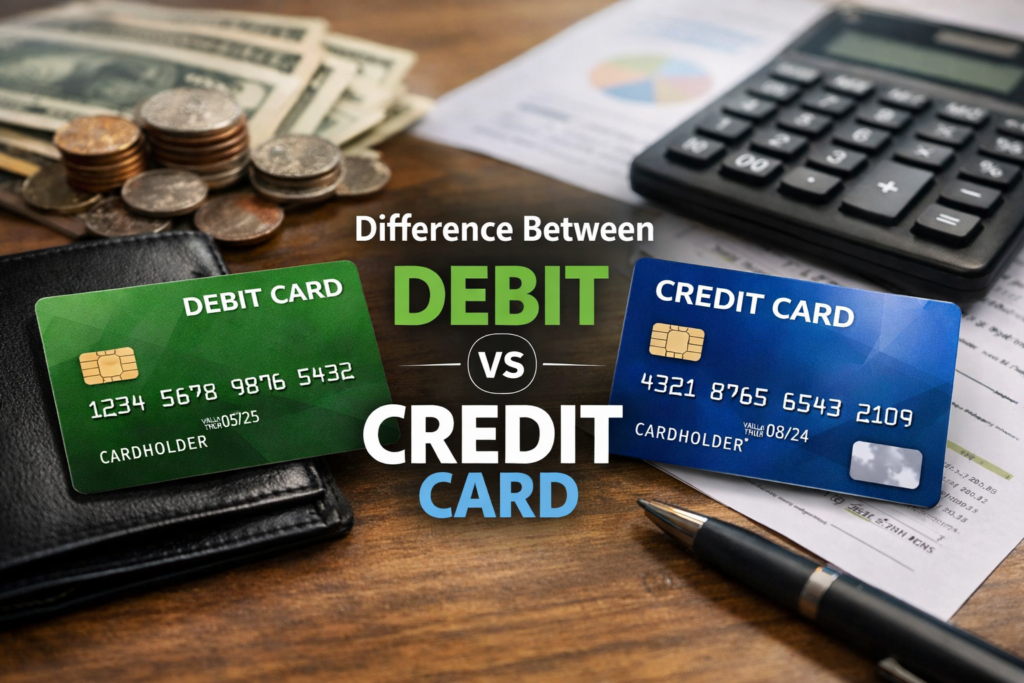
Difference Between Debit and Credit Cards
Have you ever felt confused about choosing cards when paying with money anywhere? Many people ask friends about the difference between debit and credit card choices. This confusion can cause bad spending habits and money stress later. That is where this blog becomes your friendly guide. We will explain the difference between debit and credit cards simply.
You will learn which card saves money and builds credit safely. This guide helps beginner shoppers and online buyers clearly. We explain real examples, fees, safety, and rewards easily. After reading, you can choose cards confidently without fear.
What is the Difference Between Debit and a Credit Card?
The difference between a debit and a credit card depends on the money source. Debit cards use your bank money, while credit cards borrow money. Knowing this difference helps control spending and avoid debt.
How Debit Cards Work In The United States
Let me explain this simply, like chatting with a friend. Debit cards take money directly from your checking account. This explains how debit cards work in the US clearly. Your debit card is always linked to your bank balance. This shows a debit card linked to a checking account clearly. If the balance is low, the payment may fail instantly.
The debit card payment process is fast and direct. Money leaves the account right after you swipe your card. No bills arrive later, which feels stress-free.
Debit Card Advantages
• Debit cards help control spending and avoid growing debt easily. You only spend money already owned safely. This makes a debit card for everyday purchases very helpful.
• Debit cards allow quick cash withdrawals from ATMs anywhere. Many stores offer cashback during checkout. This saves time during shopping trips.
• Debit cards usually have fewer charges than credit cards. However, watch for debit card overdraft fees carefully. Banks may charge fees when the balance goes negative.
Debit Card Fees And Security
Some banks charge debit card fees in the US. Fees include overdrafts, replacement cards, and foreign usage. Always check the bank rules before using. Modern cards include debit card security features. PIN protection alerts and transaction monitoring help. These reduce risk during purchases.
How Credit Cards Work In The United States
Now, let us talk about credit cards in a friendly style. Credit cards let you borrow money from a card issuer. This explains how credit cards work in the US. Each card has a spending limit set by the issuer. This is called the credit card credit limit. You must stay within this approved amount. You receive a monthly bill showing spending. This is a credit card billing cycle explanation. You pay the balance later based on the statement.
The bill shows the credit card statement balance clearly. You can pay a full or partial amount. Partial payment leads to interest charges. Paying only the minimum is allowed monthly. This is the minimum payment on the credit card option. The remaining balance continues growing.
Credit Card Costs And Fees
Interest is charged on unpaid balances monthly. This is known as the credit card interest rates APR. Rates vary by card type. Some cards charge yearly costs for ownership. This is the credit card annual fee detail. Premium cards usually charge more.
Missing payments leads to credit card late payment fees. Late fees hurt wallet and credit score.
Always pay before the due date. Using cash advances costs extra money. This includes credit card cash advance fees. Interest starts immediately after withdrawal.
Credit Card Benefits And Protection
Credit cards offer interest free grace period. Pay the full balance and avoid interest completely.
This helps smart planners. Cards include strong credit card fraud protection services.
Unauthorized charges can be reversed easily. This adds peace of mind. Most cards provide zero liability protection guarantees.
You are not responsible for fraud charges. This improves trust during usage. Consumers also have chargeback rights in the US. You can dispute bad purchases easily. Banks investigate issues for you.
Debit Card Vs Credit Card Comparison
Let us compare cards in simple words now. This debit vs credit card comparison helps decision-making. Each card serves different needs.
Spending Control And Budgeting
Debit cards limit spending to available money. Credit cards allow delayed payment flexibility.
This shows debit cards and credit cards clearly.
Safety And Online Use
Credit cards are safer for online purchases. This explains debit card vs credit card safety.
Fraud protection is stronger on credit cards. For shopping online, many prefer credit cards.
This covers online shopping with a debit vs credit card. Chargebacks protect buyers better.
Rewards And Benefits
Debit cards rarely offer rewards or bonuses. Credit cards give credit card rewards and cashback. Some offer travel perks. You can earn credit card points and miles. These rewards reduce travel and shopping costs. Debit cards usually lack rewards.
Debit Card Vs Credit Card Pros And Cons
Let me break it down in a friendly and simple way. This section covers debit card vs credit card pros and cons. Both cards have strengths. Debit cards avoid debt but lack rewards. Credit cards build credit but risk overspending. Balance matters always.
Which Card Is Better In The United States
People often ask which card is best. The answer depends on spending habits and goals.
This explains debit card vs credit card, which is better in the USA. Debit cards work best for controlled spending. Credit cards suit builders of credit history. Choose based on personal needs.
Credit Cards And Credit Score Building
Credit cards help build a financial reputation. This explains the credit card for building a credit score. Debit cards do not affect scores. Using cards responsibly improves the impact of credit cards. Payment history matters most here.
Late payments harm scores. Scores like the FICO credit score measure trustworthiness. Good scores help with loan approvals later.
Credit cards play a key role. Another factor is the credit utilization ratio. Lower usage improves scores significantly. Keep balances low.
Approval Requirements And Beginner Options
Banks check income and history before approval. This explains credit card approval requirements. New users may face limits. Beginners can choose a secured credit card vs a debit card. Secured cards require a deposit first. They help build credit safely. Many banks offer the best credit cards for beginners in the USA. These cards have low limits.
They teach responsible usage.
Choosing the Right Card for Payments
For bills, groceries, and small purchases, use debit. For online and large purchases, use credit.
This balances safety and control. This also explains credit card vs debit card for online payments. Credit cards offer better dispute rights. Online fraud risk stays lower.
Understanding the difference between debit and credit cards empowers decisions. You avoid fees, debt, and stress. Smart choices lead to financial success.
Frequently Asked Questions
Is a debit card safer than a credit card?
Credit cards offer better fraud protection overall. Debit cards expose bank money directly.
This affects the difference between debit and credit card safety.
Can debit cards build credit scores?
Debit cards do not report to credit bureaus. They never affect scores. Only credit cards impact credit history.
Should beginners use debit or credit cards?
Beginners should start with debit cards. Later, add beginner credit cards.
This balances learning and safety.
Do credit cards always charge interest?
Interest applies only to unpaid balances. Pay the full balance monthly.
Then the interest stays zero.
Is using both cards a good idea?
Yes, using both cards offers balance. Debit controls spending while credit builds history.
This solves the difference between debit and credit card confusion.