Introduction
Are you concerned about paying for college without incurring significant debt? Student loans can seem scary, but they help millions achieve dreams. Many students struggle to determine which loan type is best suited for them.
Choosing the wrong loan can cost you thousands in extra payments. This guide breaks down everything about student loans in simple terms. You will learn about federal student loans and private student loans clearly.
We cover student loan repayment plans that fit your income perfectly. You will discover student loan forgiveness options that save you money. Understanding student loan interest rates helps you make smarter financial decisions today.
This article gives you tools to manage student loan debt successfully. Smart Finance Mentor is here to guide your education financing journey. Let’s explore how student loans can work for you, not against.
What Are Student Loans?
Student loans are borrowed money you use to pay for college. You must repay this money with interest after you finish school. Think of it like borrowing money from a friend temporarily. The government or banks lend you money for your education costs. You promise to pay it back once you start earning money.
Understanding Different Types of Student Loans Available Today
Choosing the right loan type is crucial for your financial future. Let me break down your options in the simplest way possible.
Federal Student Loans: Government-Backed Education Financing
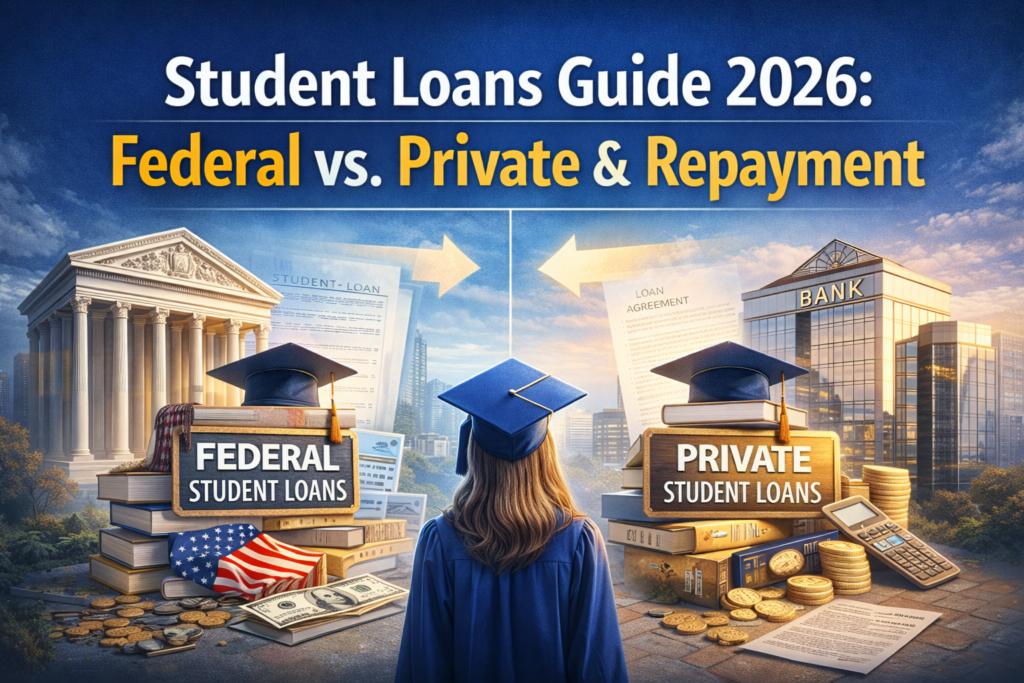
Federal student loans come directly from the Department of Education student loans program. These loans typically offer lower rates than other borrowing options available. The government sets the interest rates so everyone gets fair terms. You don’t need perfect credit to qualify for these helpful loans. Most students start here because terms are usually much more favorable.
Direct Subsidized Loans help students who really need financial help desperately. The government pays your interest while you are still in school. This saves you tons of money compared to other loan types. You must show financial need to get this amazing loan benefit. After graduation, you only pay back what you originally borrowed.
Direct Unsubsidized Loans are available to almost every college student today. Interest starts building up from the day you receive your money. You can pay interest during school or let it add up. These loans don’t require you to prove you need money badly. Almost anyone enrolled in college can get this loan type easily.
PLUS Loans help parents pay for their children’s expensive college education. Graduate students can also use PLUS loans for advanced degree programs. These require a basic credit check before approval can be granted. Interest rates are slightly higher than undergraduate direct loans. Parents love this option when their kids need extra funding.
Private Student Loans: Bank and Lender-Based Options
Private student loans come from banks and other financial lending companies. Interest rates vary widely depending on your credit score and history. You might need a cosigner if you have limited credit history. Student loan interest rates for private loans can be much higher. Always compare multiple lenders before you sign any loan paperwork today.
Private lenders look at your ability to repay the borrowed money. Good credit scores help you get better rates and save money. Some private student loans require payments while you are still attending school. Others let you wait until after you finish your degree program. Read all terms carefully before accepting any private loan offers today.
Student Loan Consolidation: Combining Multiple Loans Into One
Student loan consolidation merges all your loans into one single payment. This simplifies your life by reducing multiple payments to just one. You work with one lender instead of juggling several different ones. Your interest rate becomes a weighted average of previous loan rates.
Consolidation can extend your repayment period and lower monthly payment amounts. However, longer repayment means you pay more interest over the years. Consider this option carefully after you understand all potential long-term consequences. Many students find consolidation helpful for managing their finances much better.
How to Apply for Student Loans Successfully
Getting student loans is easier when you know the exact process. Let me walk you through each important step you need.
Step 1: Complete Your FAFSA Form First
The FAFSA determines your student loan eligibility for federal aid programs. Fill out this free form online at the official FAFSA website. You need your tax returns and financial information readily available nearby. Submit your FAFSA as early as possible each academic school year. This form unlocks access to grants, scholarships, and federal student loans.
Step 2: Review Your Financial Aid Award Letter Carefully
Your school sends an award letter showing all available aid options. This includes grants, scholarships, work study, and various student loans offered. Compare the types of aid and choose what works best. Accept only what you absolutely need to cover educational expenses properly. Remember that student loan debt adds up fast over four years.
Step 3: Accept Your Federal Student Loans First Always
Always max out federal student loans before considering any private options. Federal loans offer better protections and more flexible student loan repayment options. Complete entrance counseling to understand your responsibilities as a borrower clearly. Sign your Master Promissory Note to finalize the loan agreement legally.
Step 4: Research Private Student Loan Lenders, If Needed
If federal loans don’t cover everything, then explore private student loans carefully. Use online comparison tools to check rates from multiple lending companies. Look at student loan interest rates, repayment terms, and borrower benefits offered. Ask about the student loan grace period and when payments actually must begin. Choose a lender with good customer reviews and reasonable payment terms.
Step 5: Understand Your Total Student Loan Debt Amount
Use a student loan calculator to estimate your future monthly payments accurately. Calculate how much you will owe after finishing all your schooling. Consider your expected salary in your chosen career field realistically. Make sure your future income can comfortably handle your loan payments. Borrowing smart today prevents serious financial stress after graduation.
Student Loan Repayment Plans That Fit Your Income
Student loan repayment doesn’t have to feel impossible or completely overwhelming today. The government offers several plans designed specifically for different income levels.
Standard Repayment Plan: Fixed Payments for Ten Years
You pay the same amount every single month for ten years. This plan costs less interest overall compared to other available options. Monthly payments might feel high, especially when you have just started working. But you finish paying faster and save money long term overall.
Income Driven Repayment Plans: Payments Based on Earnings
Income-driven repayment plans adjust your payments based on actual earnings. Your payment is usually ten to fifteen percent of your income monthly. If your income is very low, your payment could be zero. After twenty or twenty-five years remaining debt gets completely forgiven. This option helps people with lower salaries manage student loan debt better.
Graduated Repayment Plan: Payments Increase Over Time Gradually
Payments start low and increase every two years throughout the term. This works well if you expect your salary to grow steadily. You pay more interest compared to the standard repayment plan overall. The plan lasts ten years, just like the standard payment option.
Student Loan Forgiveness Programs That Can Help You
Student loan forgiveness erases some or all of your remaining loan balance. Several programs exist for people working in specific jobs or fields.
Public Service Loan Forgiveness: Help for Government Workers
Work for the government or nonprofit organizations for ten full years consistently. Make one hundred twenty qualifying payments under an approved repayment plan. After ten years, your remaining federal student loan balance gets completely forgiven. Teachers, nurses, and social workers often benefit from this amazing program.
Teacher Loan Forgiveness: Support for Educators in Need
Teach full-time for five complete years in low-income schools. You can get up to seventeen thousand five hundred dollars forgiven. This applies only to federal student loans you borrowed for college. Many teachers use this program to reduce their student loan debt.
Income Driven Repayment Forgiveness: Long Term Payment Relief
Make payments under an income-driven repayment plan for many years. After twenty or twenty-five years, any remaining balance gets forgiven. You must consistently stay enrolled in the income-driven plan throughout. This helps borrowers who never earn high salaries in their careers.
Managing Student Loan Interest Rates and Saving Money
Student loan interest rates directly affect how much you pay overall. Understanding rates helps you make smarter decisions about your student loans.
Fixed vs Variable Interest Rates: Know the Difference
Fixed rates stay the same for your entire loan repayment period. Variable rates can go up or down based on market conditions. Federal student loans always have fixed rates for borrower protection benefits. Private student loans might offer variable rates that seem lower initially. Variable rates can increase and cost you more money in eventually later.
Student Loan Refinancing: Lower Your Interest Rate Possibly
Student loan refinancing means replacing loans with a new, lower-rate loan. This works best when you have good credit and a steady income. You can refinance private student loans and federal student loans together, possibly. But refinancing federal loans means losing important federal protections and benefits. Consider this carefully before you refinance any federal student loans ever.
What Happens If You Can’t Make Payments Right Now
Life happens, and sometimes you cannot afford your student loan repayment currently. Several options can help you avoid student loan default, which ruins credit.
Student Loan Deferment: Temporarily Pause Your Payments Completely
Student loan deferment lets you stop making payments for a specific time. You must qualify based on unemployment, school enrollment, or other hardships. Interest might not accrue on subsidized federal student loans during deferment. This gives you breathing room when facing temporary financial struggles today.
Forbearance: Short-Term Payment Relief When You Need It
Forbearance also pauses payments, but interest keeps building on all loans. This is easier to get than a deferment for most student borrowers. Use forbearance only when you absolutely have no other choice. It costs you more money long-term because interest never stops.
Avoiding Student Loan Default: Protect Your Financial Future Now
Student loan default occurs when you fail to make payments for several consecutive months. Default ruins your credit score and makes future borrowing nearly impossible. The government can garnish your wages and take tax refunds away. Contact your loan servicer immediately if you are having trouble making payments. They can help you find a better student loan repayment plan.
Special Considerations for International and UK Students
Student Loan for International Students: Limited Options Available Here
Student loans for international students in America are quite challenging, unfortunately. Most federal programs require you to be a United States citizen. Private student loans might be available with a United States cosigner. Research lenders who specifically work with international students attending American schools.
Student Loan in the UK: A Different System from America
Student loans in the UK work very differently from the American system entirely. UK students get funding from the Student Loans Company directly there. Repayment starts only when you earn above a certain threshold amount. Education loans for students in the UK often have more favorable terms. Research your home country options before borrowing in the United States.
Understanding Student Loan Financial Aid and Grace Periods
Student Loan Financial Aid: Free Money Before Borrowing Loans
Student loan financial aid includes grants and scholarships that you never have to repay. Always apply for free aid before taking out any student loans. The FAFSA unlocks both free aid and loan options automatically. Maximize grants and scholarships to minimize your total student loan debt amount.
Student Loan Grace Period: Time Before Repayment Begins Now
Most loans have a student loan grace period after you finish school. This is usually six months before your first payment is due. Use this time to find a job and prepare your budget. Understand when your grace period ends so you never miss payments.
Frequently Asked Questions About Student Loans
Q1: What is the difference between federal and private student loans?
Federal student loans come from the government with fixed interest rates. Private student loans come from banks and have varying interest rates. Federal loans offer better repayment options and possible forgiveness programs.
Q2: How do income-driven repayment plans work for borrowers?
Income-driven repayment plans calculate payments based on your actual income. Your payment is usually ten to twenty percent of your earnings monthly. If your income is low, your payment could be zero dollars. After twenty to twenty-five years remaining balance may be completely forgiven.
Q3: Can I refinance my federal student loans at lower rates?
Yes, you can use student loan refinancing to get lower rates. However, refinancing federal loans means losing federal protections and benefits forever. You lose access to income-driven repayment and student loan forgiveness programs. Consider this trade-off very carefully before refinancing any federal loans.
Q4: What happens if I default on my student loans?
Student loan default severely damages your credit score for seven long years. The government can garnish your wages and seize tax refund payments. You lose eligibility for deferment, forbearance, and other helpful payment options. Contact your servicer immediately if you are struggling with loan payments.
Q5: How can I reduce my total student loan debt?
Apply for scholarships and grants that you never have to repay. Borrow only what you absolutely need for school and living expenses. Consider working part-time to reduce the amount you must borrow. Use a student loan calculator to understand long-term costs clearly. Make extra payments when possible to reduce interest charges over time.
Final Thoughts on Smart Student Loan Borrowing
Student loans are powerful tools for achieving your educational dreams successfully. Understanding your options helps you make smart financial decisions for life. Always prioritize federal student loans before considering any private loan options.
Use income-driven repayment plans if you struggle with monthly payments. Explore student loan forgiveness programs if you work in public service. Calculate your future payments using a student loan calculator before borrowing money.
Smart Finance Mentor is here to guide you through every financial step. Make informed choices today to build a better financial future tomorrow. Your education is an investment, and smart borrowing protects that investment.